Google
 
Showing posts with label History. Show all posts

Face of Britain


Written into our facial features is a story going back generations. It is the story of who we are and where we are from - the history of Britain through war and conquest, migration and racial integration. The Channel 4 series, The Face of Britain, begins with the largest ever research project into the genetic make-up of the British public. The Welcome Trust has given a GBP2million grant to Oxford geneticist Sir Walter Bodmer to take DNA samples from hundreds of volunteers throughout Britain and find tell-tale fragments of DNA that reveal the biological traces of successive waves of colonisers - Celts, Saxons, Vikings, etc. - in various parts of Britain. These traces in part determine our facial features. In effect, this project will produce a genetic map of our islands revealing where today's Cornish or East Anglians originally came from. The project is unique in that it uses cutting edge technology to question our accepted notions of our history. Added to this, the series and the book will meld science, history and personal stories to investigate our linguistic history, our surnames and placenames and compare findings with the results of the Bodmer study.

The Face of Britain will be a launch pad to explore Britain's earliest history while investigating why we look the way we do. A must read for anybody interested in geneology

White Gold

A mere few centuries ago, both Islam and Christianity, which proclaimed themselves models of righteousness and compassion, were involved in the African slave trade, destroying the lives of millions. The history of the slaves and the slavers has been told many ways since then. Less well known is another form of slavery, the capture of about a million Europeans and Americans by Islamic slave traders, ending only in 1816. The history of this other trade forms the basis for the particulars in _White Gold: The Extraordinary Story of Thomas Pellow and North Africa's One Million European Slaves_ (Hodder and Stoughton) by Giles Milton. Milton seems to have done prodigious research (as he did for his previous bestseller, _Nathaniel's Nutmeg_), and has done his best to bridge the many gaps in Pellow's own story, producing a narrative that is often exciting and always informative.
Pellow, born in 1704 and raised in the Cornish fishing village of Penryn, wanted to run away to sea, despite the constant threat of ships being taken by the Barbary pirates. He was eleven years old when his uncle's ship was captured, and he became property of the sultan, the Moulay Ismail; the author could not have asked for a more repulsive or fearsome villain. His 25,000 white slaves were given to the enormous project of making a palace that extended for miles, packing wet lime and earth to make the enormous walls and covering it in marble and mosaics. He could not abide disobedience, even when it was merely in his imagination, and slaves and courtiers were often tortured or beheaded by his whimsy, even at his own hands. Readers should prepare for extreme unpleasantness in the descriptions of the horrors of the cells or the tortures such as the bastinado, by which a slave would be suspended upside down and the soles of his feet beaten until they were raw. Pellow converted under torture to Islam, which helped change his fortune, but he was a captive for twenty-three years, constantly wishing he were back home. He became guardian of the harem, leader of soldiers in military campaigns, and even a slave hunter, before his escape attempts finally succeeded.
Pellow was able to write the obligatory first-person account of his trials under the Turk, from which, understandably, Milton has drawn frequently. He did not live to see any end to the threat of enslavement by the fanatical Muslims which took another century to come. Strangely, Sir Edward Pellew, a distant relative, was in charge of the fleet that arrived in Algiers in 1816, bombarding the city, liberating the slaves, and permanently ending the European slave trade. Milton describes how inflamed the British press and Parliament became at the thought of their own citizens in chains, but also explains how little care they showed for black slaves shipped out of Guinea for their own use. There is little specific to compare here with our own current difficulties with the region, except that horrors, misunderstandings, and religious fanaticism seem to be an unending part of this history. _White Gold_ is, however, a riveting story of eventual triumph over long odds, and enormously entertaining.

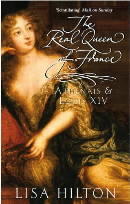
The Real Queen of France

By Lisa Hamilton
The reign of Athenais de Montespan as principal mistress of Louis XIV corresponds with the most glorious period of the Grand Siecle. Athenais was "the true Queen of France", symbol of a dazzling French culture in the 17th century. As a lover, she risked the disgrace of double adultery to conduct an affair which scandalized Europe; as a patron she supported many of the leaders of the cultural renaissance including Moliere and Racine; as a mother she is the ancestor of most of the royal houses of Europe.

The greatest beauty of her day, Athenais lived her life publicly and sensationally until accusations of witchcraft forced her from power in the "Affair of the Poisons", a mystery which remains unsolved. She fascinates not only because she achieved power at a time when it was denied to most women, but because she achieved that power through her manipulation of a prescribed role. This biography explores her life and influence.

D-day to Berlin


By Andrew Williams
The remarkable story of the Allied struggle for survival told through the voices of the British, American and German soldiers who were there. Nightfall, 6 June 1944. D-Day is over and the Allies have carved a tenuous foothold in 'Fortress Europe'. The future of Europe hangs in the balance as Hitler's formidable SS Panzer troops threaten to drive them back into the sea. D-Day to Berlin is the remarkable story of the Allied struggle for survival - the battle from the beaches of Normandy to the heart of Hitler's Reich and ultimate victory just eleven months later. The campaign to free Europe from Nazi oppression through the collective operations from D-Day to Berlin mark one of the greatest ever military offensives.

The Allies overcame initial setbacks to inflict a devastating defeat on Hitler's crack divisions in France - a victory that was threatened just months later in the bitter winter fighting of the Battle of the Bulge. The final crossing of the Rhine and the advance into Germany changed the course of European history forever. In D-Day to Berlin we meet men and women from both sides - British, American and German soldiers - whose bravery and endurance made the final push through Europe the defining drama of the Second World War.

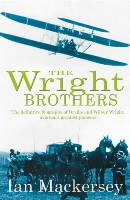
The Wright Brothers

By Ian Mackersey
The conquest of the air at Kitty Hawk, North Carolina, on 17 December 1903 was one of the supreme achievements of the 20th century. Two unknown American bicycle mechanics, Wilbur and Orville Wright, launched that day the first successful powered aeroplane, changing the world for ever. On the centennial of the historic first flights, biographer Ian Mackersey offers this study of the lives of these eccentric geniuses. Their brilliance unlocked the secrets of mechanical flight to realize one of man's oldest dreams.

Mackersey brings to life a family swept up in the fame, jealousies and law suits that exploded around them - the domineering figure of their father, Bishop Milton Wright, whose church wars raged distractingly alongside the process of invention, and their feisty, adoring sister, Katharine, whose marriage led Orville never to speak to her again. Mackersey's narrative also explains accessibly, the aerodynamic breathrough that had defeated inventive minds for centuries.

Haw-Haw: The Tragedy of William and Margaret Joyce

By Nigel Farndale

William and Margaret Joyce - Lord and Lady Haw-Haw - became one of the most ridiculed, feared and mythologized partnerships of the Second World War. His 'Germany Calling' broadcasts delivered in an upper-class drawl, and her lesser known, though no less insidious, pro-Nazi wireless talks, were part of the very fabric of the Home Front. Yet when they were captured in May 1945, only he was charged with high treason - a fact even more surprising when it became apparent that, unlike Margaret, William was not a British subject...Authorized by William Joyce's daughter, Heather, and based on new interviews and previously unpublished archives, including letters, diaries and recently declassified Security Service files, Haw-Haw is the meticulously researched and vividly written biography of this most complex and eccentric couple. Margaret was flirtatious and nonchalant, William was droll and intellectual, both were bloody minded. Fuelled by alcohol, their relationship was tempestuous but also surprisingly tender. On the 60th anniversary of their capture, Nigel Farndale recreates their lives together for the first time: from the shadows of Oswald Mosley's British Union of Fascists in London, to Josef Goebbels' Ministry of Propaganda in war-ravaged Berlin.

Hubris, bigotry and sexual intrigue followed them across Europe until the end of the war when they were arrested - immediately creating a political furore. The establishment wanted Joyce executed, but the evidence against him was inconclusive and resulted in a sensational trial that many legal minds felt was 'a blot on the British justice system'. Furthermore, Margaret was never prosecuted. Was this an act of mercy on behalf of the government, or had William secured her life by agreeing not to reveal his links to MI5? Nigel Farndale has written a compelling and evocative study of two people whose passions overrode everything they did and which eventually led to William becoming the last civilian to be hanged for treason in England, and to Margaret drinking herself to death. This is an extraordinary book about an extraordinary marriage.


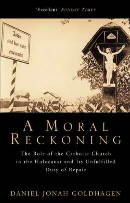
A Moral Reckoning


By Daniel Jonah Goldhagen

Daniel Jonah Goldhagen cuts through the historical and moral fog to lay out the full extent of the Catholic Church's involvement in the Holocaust, transforming a narrow discussion fixated on Pope Pius XII into the long overdue investigation of the Church throughout Europe. He shows that the Church's and the Pope's complicity in the persecution of the Jews was much deeper than has been understood. The Church's leaders were fully aware of the persecutions. They did not speak out and urge resistance. Instead, they supported many aspects of the persecution. Some clergy even took part in the mass murder. But Goldhagen goes further. He develops a new, precise way for assessing the Church and its clergy's culpability, which was more extensive and varied than has been supposed. He then shows that the Church has, even according to its own doctrine, an unacknowledged duty of repair. He explores it, analyzes the Church's tactics of evasion, and delineates all that the Church must do to repair the harm it inflicted on Jews, and to heal itself. Brilliantly researched and reasoned, A Moral Reckoning is a path- breaking book of profound, and potentially explosive, importance.